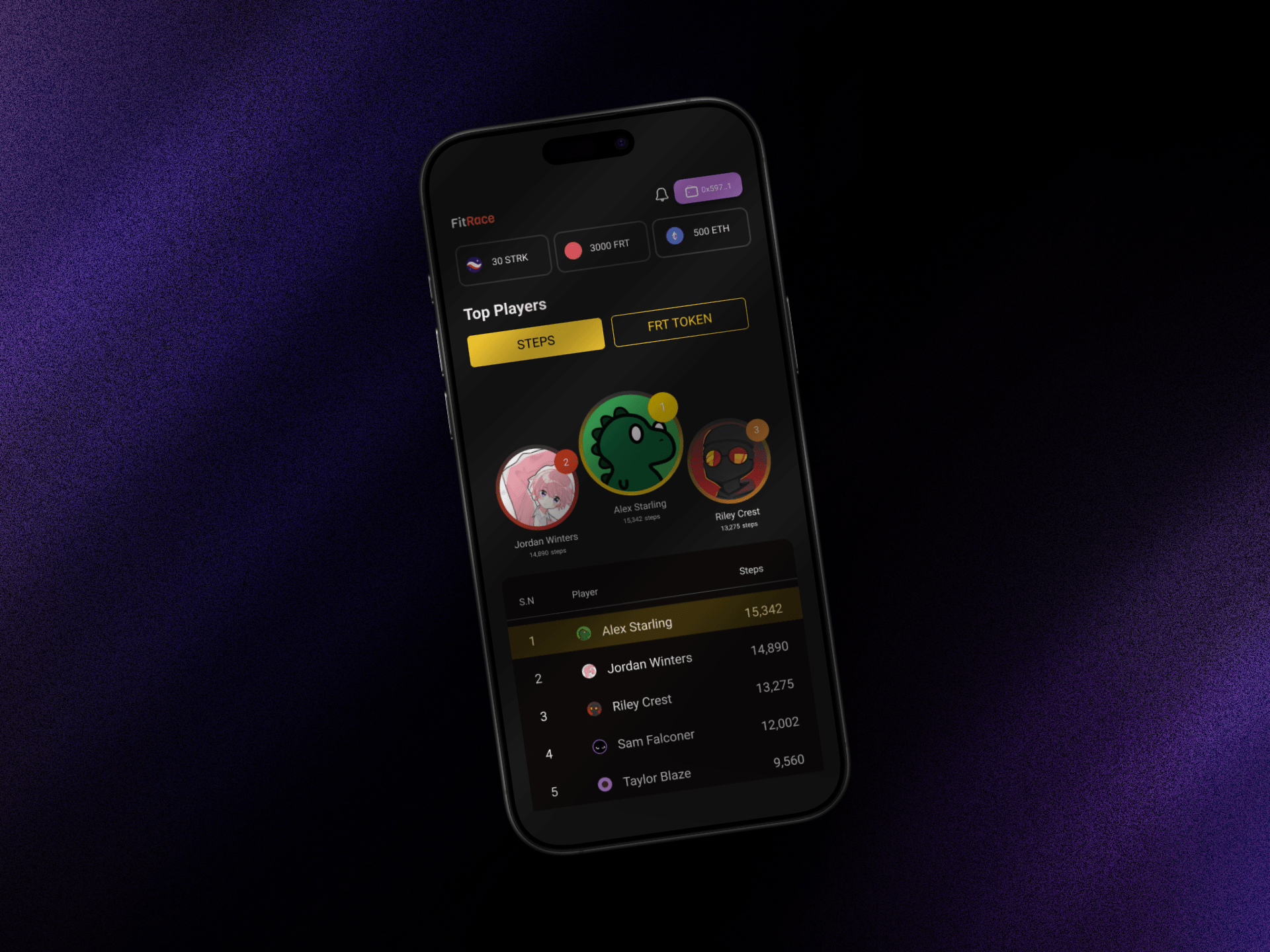
Web3 lifestyle hub combining fitness tracking with social features.
FitRace is a Web3 lifestyle hub combining fitness tracking with social features. Users can challenge friends, track progress together, and earn tokens by moving — all while being part of a vibrant community. Even without purchasing NFTs, users can earn tokens, though NFT holders get higher rewards.
FitRace was envisioned as a Web3 social hub where users could challenge friends, participate in competitions, and connect through various challenges. As an early-stage startup, the project faced key design and technical challenges that could hinder adoption.
One major concern was the "first buy, first NFT" scheme, which could create unfair barriers and deter new users. Additionally, traditional blockchain account management created wallet onboarding complexity, potentially overwhelming newcomers and blocking seamless access.
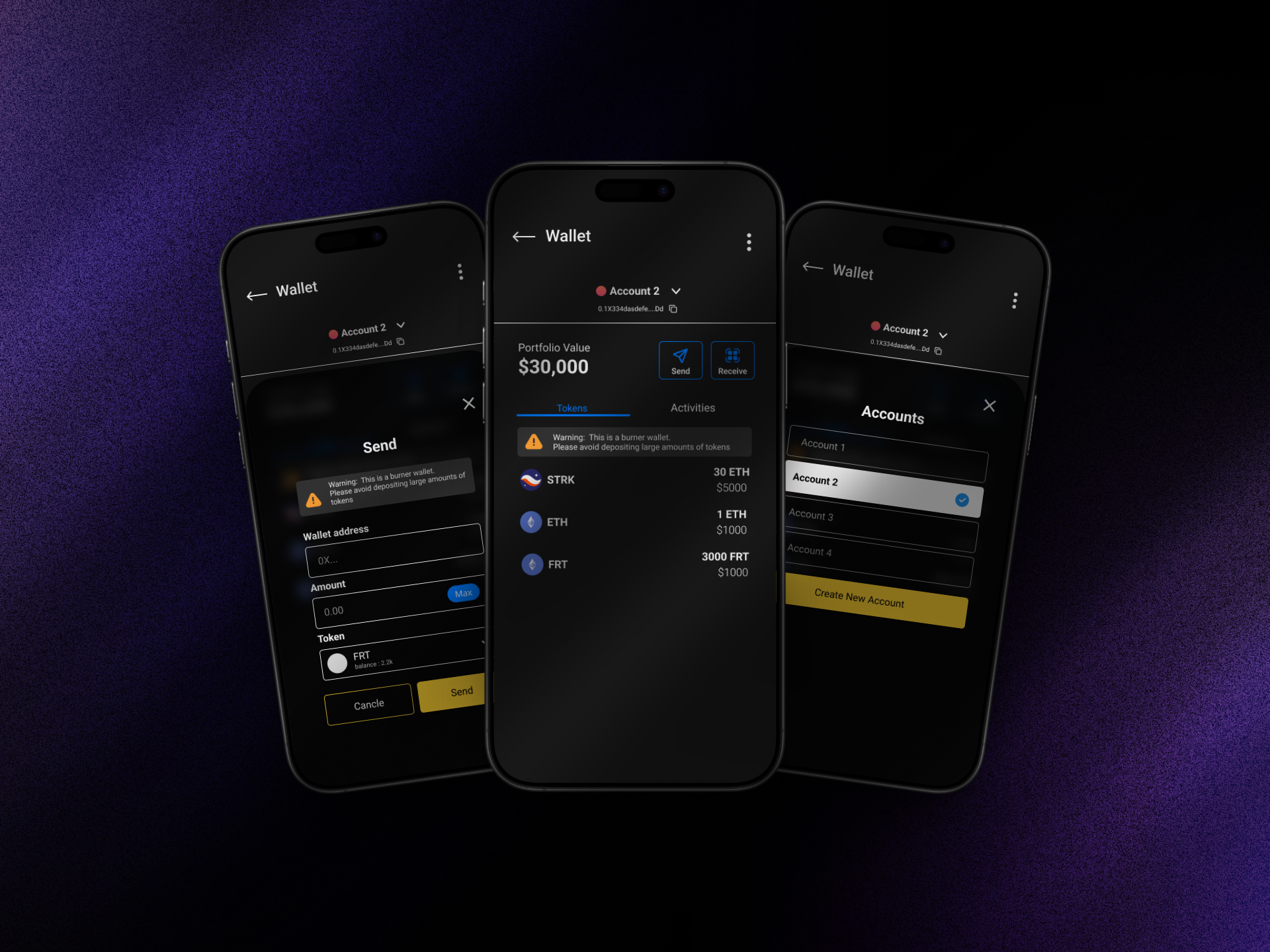
To overcome these challenges, we implemented StarkNet account abstraction to simplify wallet management. This enables users to create and manage multiple accounts easily, without the friction of handling private keys or complex wallet setups.
On the design side, I focused on creating a clean, intuitive UI/UX that would make navigation easy and encourage social engagement and participation in challenges — key elements for building a vibrant community from the ground up.
Initial wireframes focused on simplifying the complex Web3 concepts into familiar fitness app interactions.
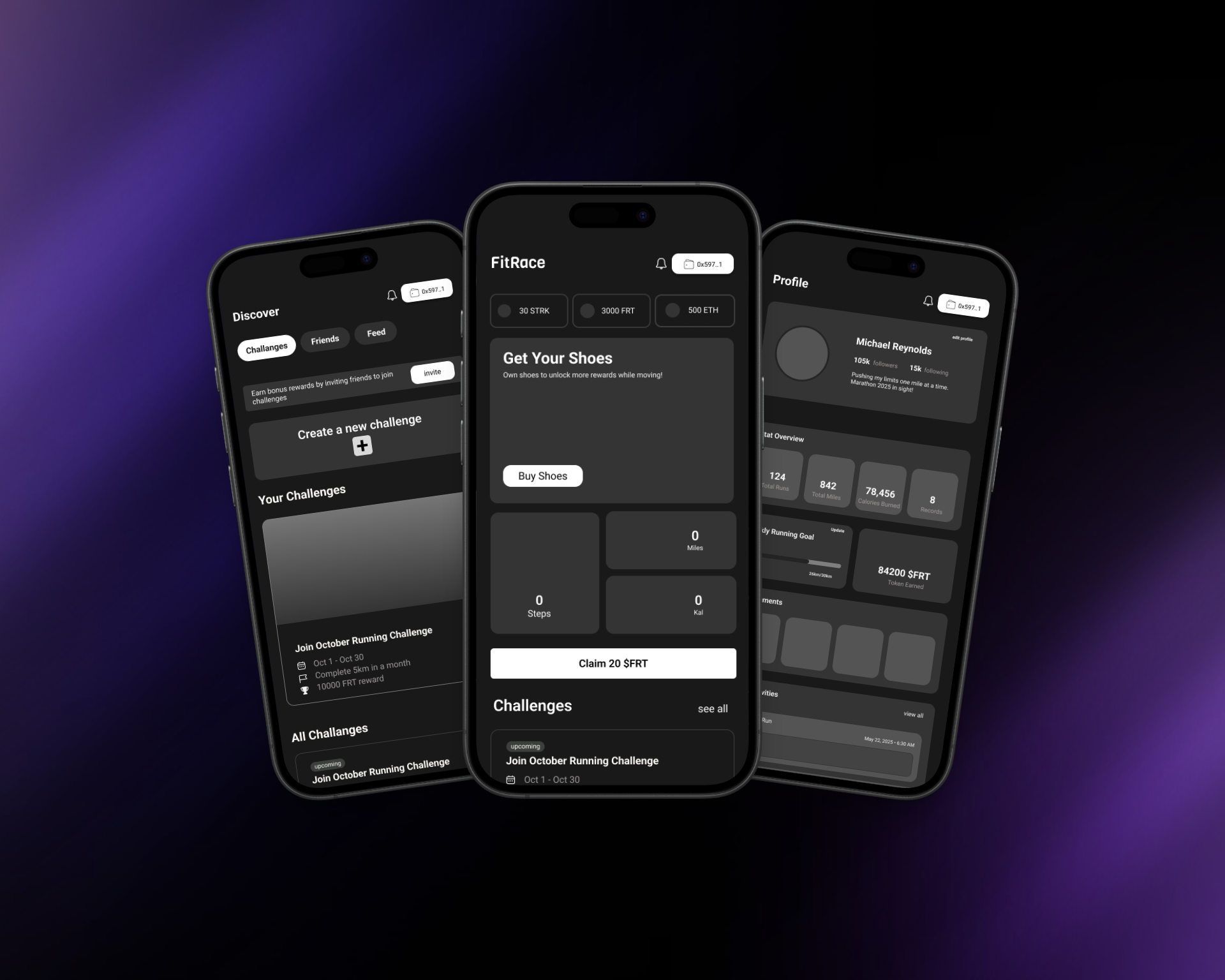
The information architecture was designed to prioritize social features while making Web3 elements accessible but not intrusive.
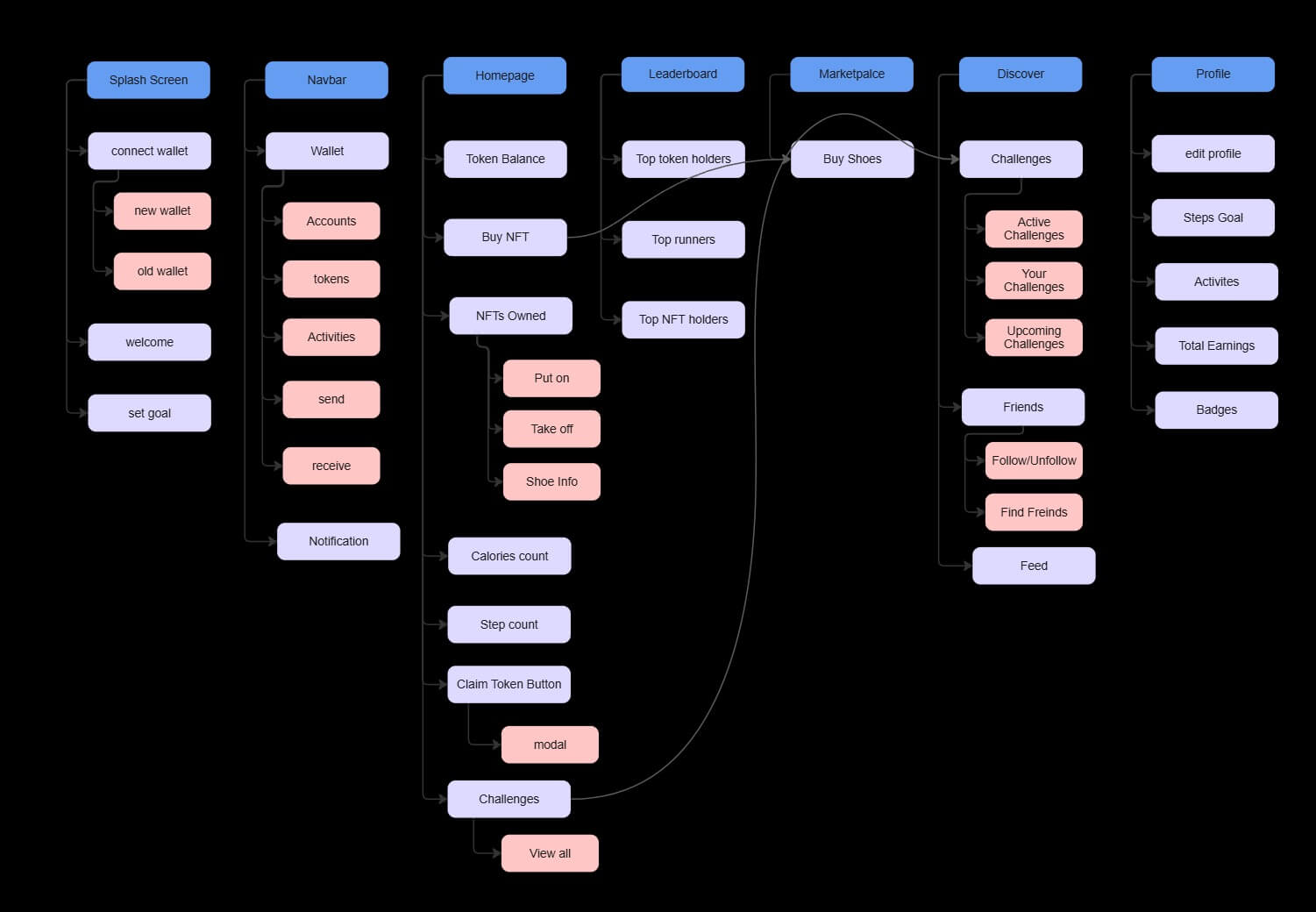
I focused on seamless utility and user motivation. Users can easily view and equip their existing NFTs to maximize token rewards or switch shoes based on reward dynamics — all directly from the home screen. I also designed the Challenges section into the homepage, allowing users to quickly discover and join ongoing challenges without extra navigation. Yellow accent buttons symbolize energy, excitement, and urgency.
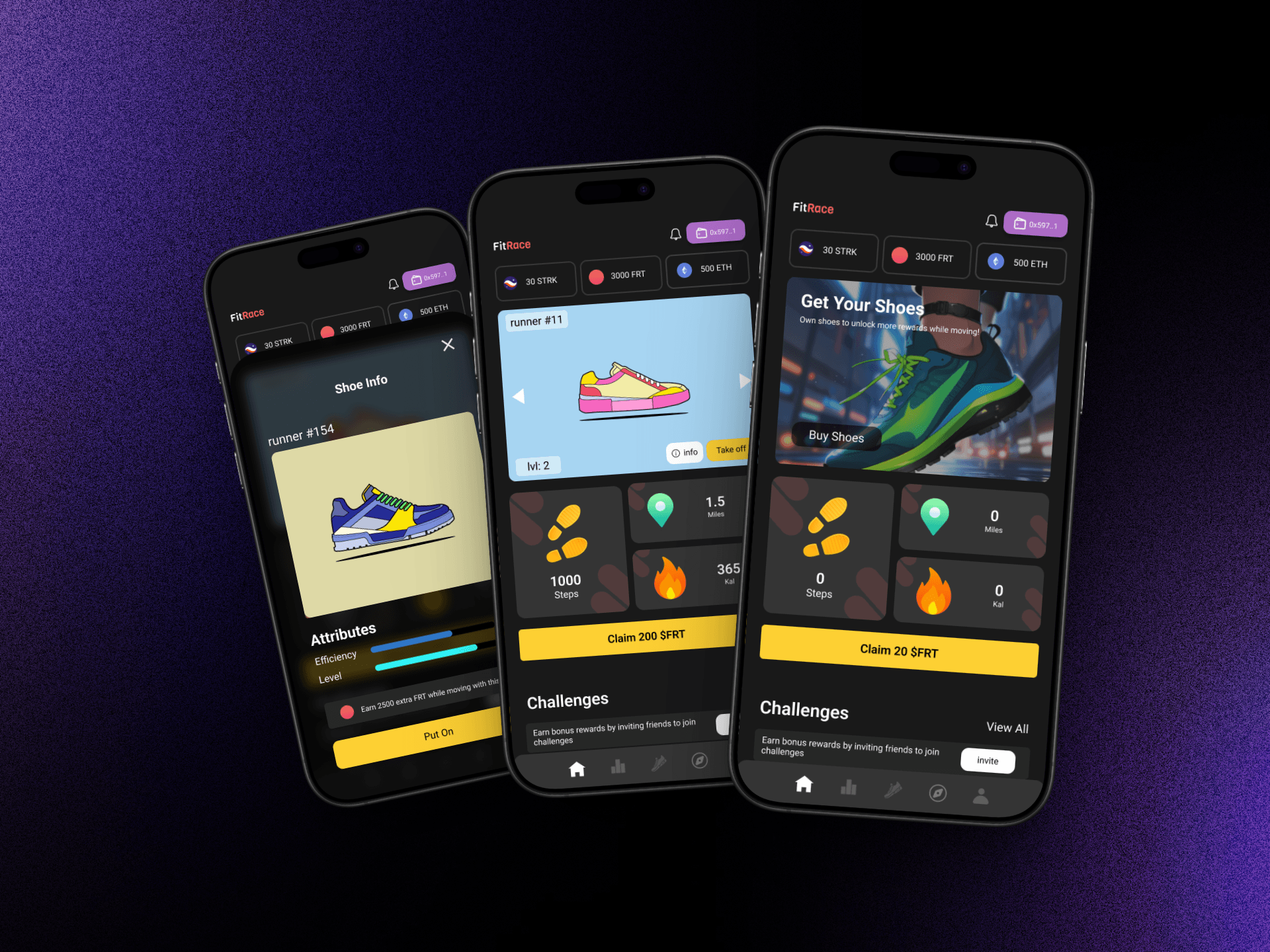
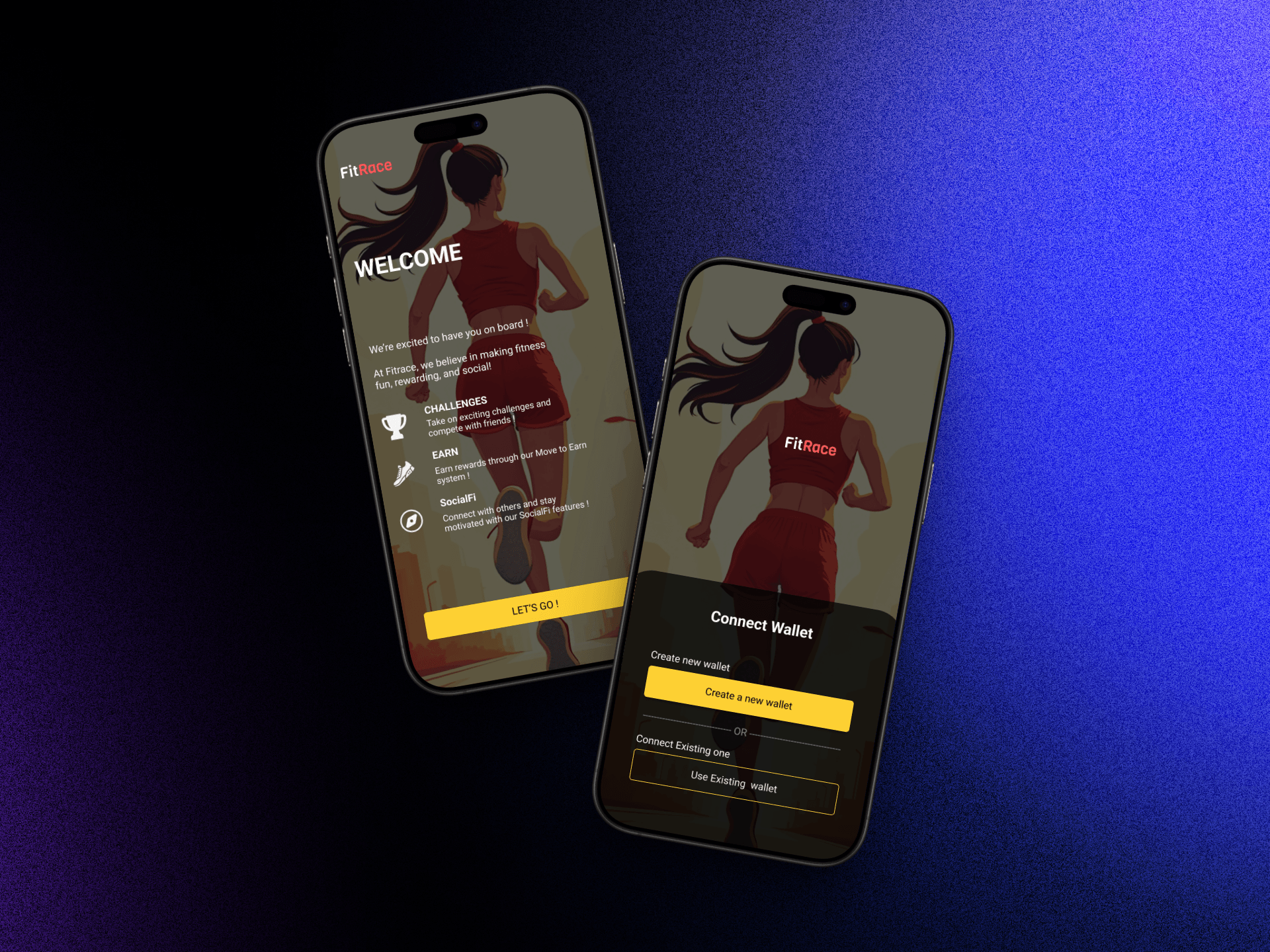
The onboarding process was streamlined to hide complex blockchain concepts behind familiar fitness app patterns, only revealing Web3 functionality when users were ready to explore it.
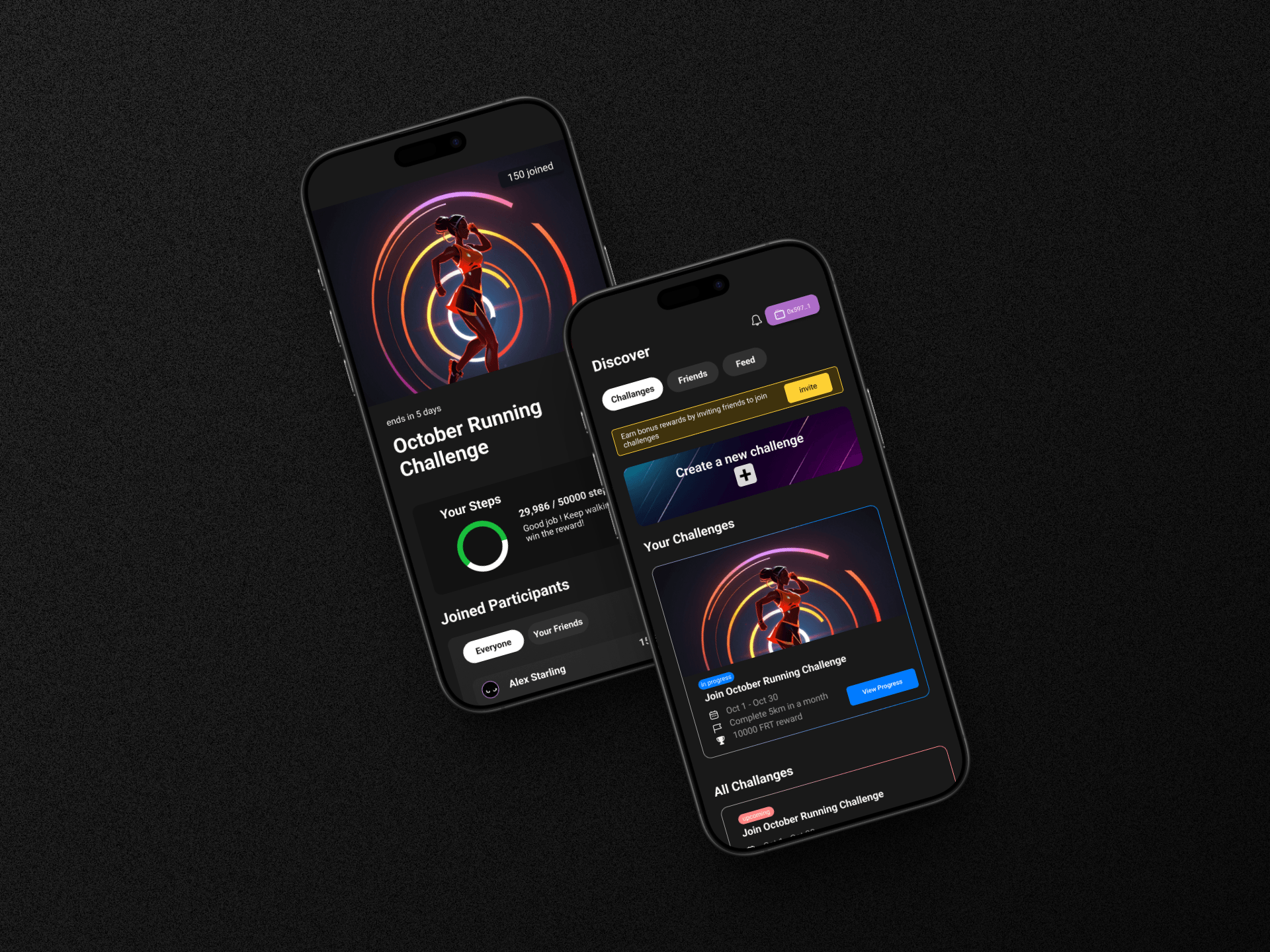
The challenges interface was designed to encourage social interaction and friendly competition while clearly showing rewards and progress.
Wallet management was simplified using StarkNet account abstraction, making it feel like a regular account system rather than traditional crypto wallets.
The leaderboard design balanced competition with community building, showing friends' activity prominently while also displaying top performers.